
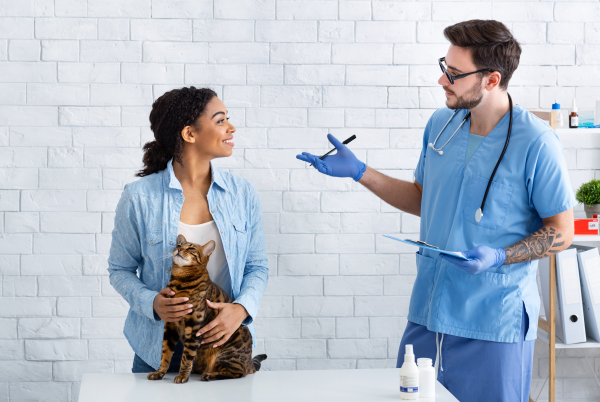
If your pet could write the review, a veterinary visit might get three stars: “Excellent treats. Questionable thermometer. Would prefer the park.”
But while your pet is keeping track of the snacks, your veterinarian is gathering clues about their health.
October is Pet Wellness Month—a great reminder that routine veterinary visits are for much more than vaccinations. Vaccines provide important protection, but a wellness visit also includes a conversation about daily life, a physical exam, and recommendations tailored to your pet. Even when no vaccines are due, there is plenty worth checking.
You bring the inside scoop
You know your pet’s routines: the breakfast dance, the favorite sleeping spot, the very firm opinion about dinner being five minutes late. That makes your observations an important part of their care.
Your veterinarian will ask about eating, drinking, bathroom habits, activity, and behavior. Mention changes, even if they seem small: more trips to the water bowl, less enthusiasm for walks, or different litter box habits. Pets cannot explain how they feel, and early signs of illness can be subtle. Your everyday observations help your veterinarian decide what needs a closer look.
There is no need to arrive with a diagnosis. “Something seems different” is a useful place to start. And don’t forget home videos – pets act differently in clinic than at home so if you’re seeing anything unusual, take a video to show to your vet.
Their lifestyle helps shape the plan
Is your dog an outdoor adventurer or a dedicated couch companion? Does your cat stay indoors or explore the neighborhood?
Questions about your pet’s lifestyle help your veterinarian tailor their care. Food, exercise, parasite prevention, dental care, and weight management all belong in this conversation. It is also your chance to ask questions: Are those portions right? What should you do about toothbrushing? How can you support your pet’s changing needs?
Think of it as a planning session for your pet’s everyday well-being—with someone who will happily discuss both poop and portion sizes.
There is more to that exam than meets the eye
Some parts of a physical exam are easy to recognize. Others may look like your veterinarian is simply giving your pet a friendly once-over. Those hands, eyes, and ears are working.
During an exam, your veterinarian can check for:
- Weight and muscle changes, including extra body fat or muscle loss.
- Mouth problems, such as inflamed gums or broken teeth.
- Skin, ear, and eye changes, including irritation, discharge, or lumps.
- Unusual heart or lung sounds, such as a heart murmur.
- Movement problems or discomfort,
- Changes in the abdomen like masses or liver enlargement.
These findings may point to a problem that needs further investigation. An exam helps your veterinarian work out what to check next; it does not always provide the whole answer on its own.
Blood and urine tell another part of the story
Your pet may look healthy, eat well, and still have early changes happening inside their body. Wellness testing can help uncover some of those changes before obvious signs appear.
Common tests include:
- A complete blood count (CBC): Checks red blood cells, which carry oxygen; white blood cells, which respond to infection and inflammation; and platelets, which help blood clot.
- A blood chemistry panel: Measures substances in the blood that provide clues about organs and body processes. Results can help identify possible kidney or liver problems, diabetes, and other conditions.
- A urinalysis: Examines urine for clues about kidney and urinary tract health. It can also help identify signs of diabetes or urinary inflammation. Blood and urine results work together to give a fuller picture.
Yes, that little cup of pee has a surprisingly important job.
Normal results are useful, too
Testing does not have to uncover a problem to be valuable. Results collected while your pet is well provide a starting point for future comparisons. Over time, your veterinarian can look for changes and patterns that help guide care.
An abnormal result is not always a diagnosis, either. Your veterinarian may recommend repeating a test or investigating further, depending on the finding.
Your pet’s age, health, and individual risks help determine which tests make sense and how often to perform them. Finding a problem earlier may allow treatment or monitoring to begin before it causes more serious difficulties.
Make room for wellness this October
Bring your questions, your observations, and details about what your pet eats—including the extras. Ask the clinic beforehand whether you should bring a sample or follow any instructions before testing.
This Pet Wellness Month, schedule a wellness visit and ask what care fits your pet’s needs. Your pet can focus on the treats. You and your veterinary team can focus on helping them feel their best.